
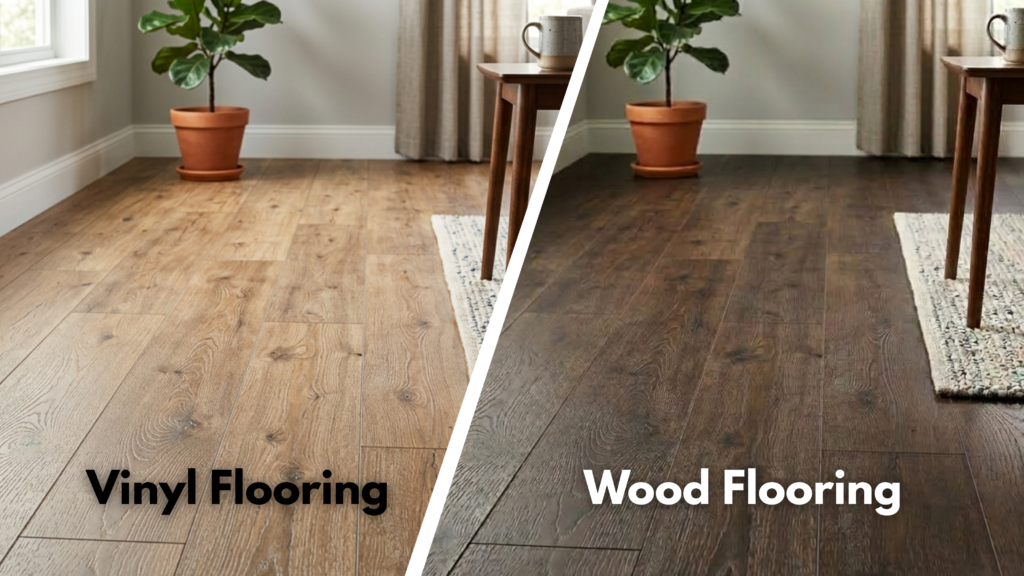
Deciding between hardwood and vinyl flooring can feel like an overwhelming cross roads in any renovation, flip, or new building project. At its core, this decision is really about finding the right balance between the classic, unmatched beauty of natural materials and the rugged, high- performance durability of modern synthetics.
There is no single “right” answer. The best choice will depend heavily on your upfront budget, the type of project you are working on, the demands of your household or tenants, and how much ongoing maintenance you are willing to take on. Below, I break down the most important factors to consider when choosing between luxury vinyl and traditional hardwood flooring so you can make a confident, informed investment.
1. The Cost Breakdown: Upfront vs. Long term value
When it comes to the initial hit to your wallet, the difference between these two materials are stark.
- Vinyl Flooring: Typically ranges from $2 to $8 per square foot for the materials.
- Hardwood Flooring: Typically ranges from $8 to $25+ per square foot for the materials.
Vinyl is the undisputed champion of budget- friendly flooring, especially when you need to cover very large square footage. Vinyl wins the upfront cost category handily, offering the highly sought after look of wood at a fraction of the price. Furthermore, installation labor for vinyl is generally much cheaper than hardwood, further widening the price gap.
However, upfront cost is only half the story. While hardwood tends to be significantly pricier than vinyl to purchase and install, the resale value of homes with genuine hardwood is almost always higher. Hardwood is a premium feature that appraisers and homebuyers actively look for. It can also be sanded and refinished multiple times, giving it a multi generational lifespan. This makes it a highly desirable investment for homeowners looking to inject permanent character and equity into a property.
2. Durability and Lifespan
If we are strictly talking about standing up to daily abuse vinyl is the clear winner.
Modern Vinyl specifically the SPC (Stone plastic Composite) variety is remarkably resilient for residential and commercial uses. It is engineered with a rigid core and a tough, transparent wear layer that protects the photographic layer beneath it. SPC vinyl can effortlessly withstand pet claws, heavy furniture legs, high heels, and children’s hard toys without showing signs of wear.
Hardwood, being natural and relatively soft material, requires a more careful lifestyle. It can be easily scratched by large dogs, dented by dropped heavy objects, and gouged by sliding furniture.
On the other hand, hardwood possesses a forever lifespan that vinyl simply cannot compete with. Because it is solid wood (or features a thick veneer in the case of engineered hardwood), it can be periodically sanded down to raw wood and completely refinished.
A Note on Refinishing: It is noteworthy to mention that while refinishing extends the life of hardwood indefinitely,
sanding and re-staining comes at a premium cost. In many cases, refinishing an old hardwood floor costs almost as much as
completely replacing a damaged vinyl floor once the vinyl's wear layer is compromised.
3. Water Resistance and Climate Compatibility
When it comes to moisture, vinyl once again comes out on top.
High quality luxury vinyl plank (LVP) is 100% waterproof. It is virtually immune to moisture, making it the safest and best choice for wet zones in a house, such as kitchens, bathroom, laundry rooms and below grade basements where moisture vapor is a constant threat.
Hardwood and water are historic enemies. Natural wood is highly porous and reacts violently to humidity swings and standing water. Exposure to moisture can cause hardwood to fail in a variety of expensive ways including:
- Cupping: The edges of the boards raise higher than the center.
- Crowning: The center of the boards swell higher that the edges.
- Buckling: The planks pull entirely away from the subfloor.
- Rotting: Long term exposure leads to mold and materials decay.
Because of this, hardwood installation is strictly suitable for climate controlled living areas (like living rooms, dining rooms and bedrooms) that maintain stable moisture levels year round.
4. Installation and Daily maintenance
The ease of living and installing these floors is another major differentiator.
Installation:
Vinyl flooring is highly favored by DIY enthusiasts. Most modern vinyl planks feature a “click and lock” system, allowing them to float directly over the subfloor without the need for glue or nails. Hardwood, conversely requires professional installation. It must be painstakingly acclimated to the home’s humidity before installation, and it requires specialized pneumatic nailers, heavy adhesives, and perfectly level subfloors to install correctly.
Maintenance:
Vinyl requires almost zero specialized care. A simple sweep and a pass with a damp mop using a mild, pH neutral cleaner is all it takes to keep it looking brand new. Hardwood requires a bit more pampering. You must avoid excess water at all costs when cleaning, immediately wipe up spills, and routinely use specialized wood cleaners and polishes to protects the finish
5. Strategic Use: High End vs Leasable Spaces
Understanding the strengths and weaknesses of these materials dictates exactly where they should be deployed.
Why Hardwood is Preferred in High End Construction
High end construction, such as custom luxury builds, almost exclusively relies on hardwood flooring for its authenticity and sensory appeal.
Hardwood feels inherently warmer underfoot, sounds dense and solid when walked upon, and offers unique, unrepeating organic grain pattern that even the best vinyl cannot perfectly replicate. For luxury homeowners, the ability to completely change the floor’s aesthetic perhaps shifting from a dark espresso stain to a light, natural white oak 10 years down the road is a luxury that synthetics cannot provide.
furthermore, the use of hardwood flooring subtly signals quality. It reflects that the material is being installed in a premium, climate controlled environment with stable moisture levels. It indicates to buyers that the contractor or homeowners has invested the significant capital, time, and effort necessary to ensure the home’s finishes will deliver long term, generational value.
Why Vinyl Dominates Leasable spaces
If you are a landlord, real estate investor, or property manager and you are presented with both options, your first reaction should be unquestionably be vinyl. Vinyl is the ultimate risk mitigation floor due to its cost, ease of installation, negligible maintenance, and overall budget friendliness.
Turnover Efficiency
Tenant turnover is a stressful and time sensitive process. If a tenant ruins a section of vinyl, the floor does not need to be completely replaced. Because it is a floating floor, individual planks can offer be popped out and replaced relatively easily.
Landlord Pro Tip: Be Sure to keep a detailed record of the vinyl's brand, colorway, and model number. Better yet, buy an extra box or
two during the initial installation and store it on the property. This helps avoid the nightmare scenario of trying to match flooring
that may no longer be in production three years later.
Liability Protection
Vinyl’s waterproof nature acts as a shield for your property’s underlying structure. It protects the subfloor from tenant spills, plumbing leaks, or pet accidents. This is incredibly critical in multistory properties. A considerable accident on a porous hardwood floor can easily seep through, damaging the subfloor on the upper level and destroying the drywall ceiling on the lower level often creating hazardous mold in the process. Waterproof vinyl contains these spills on the surface.
Return on Investment (ROI)
While purists will argue that vinyl cannot compare to the real thing, the reality of the rental market is different. Modern luxury vinyl provides a stunning, high end aesthetic that easily attracts premium renters, but it does so without the massive capital expenditure and terrifying risk profile of natural wood. For income generating properties, vinyl simply makes the most financial sense.
Making your final decision
Ultimately, the choice between hardwood and vinyl comes down to your priorities. If you are building a forever home, prioritizing resale value, and desire the unmatched warmth of natural wood, hardwood is a brilliant investment. If you are renovating on a strict budget, outfitting a rental property, or need a bulletproof floor to survive a house full of pets and kids, luxury vinyl is the undeniable champion.